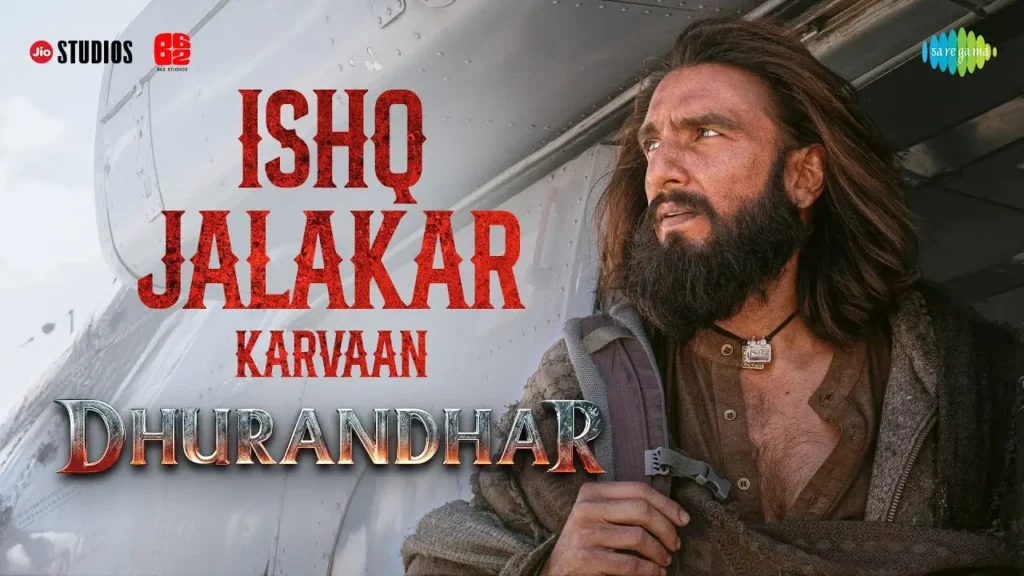
Dhurandhar – Title Track (From Dhurandhar)
Artists: Shashwat Sachdev, Hanumankind, Jasmine Sandlas, Sudhir Yaduvanshi, Charanjit Ahuja
Film: Dhurandhar
Label: Saregama India Ltd
—
Producer’s Review
Dhurandhar – Title Track: Designing Power, Not Emotion
(WorldBestMusic | Professional Producer, Composer & Mix Perspective)
—
1. Creative Intent: Building a Character Before a Song
From a producer’s point of view, Dhurandhar – Title Track is not meant to be “liked.”
It is meant to be felt as authority.
This is a title track in the purest cinematic sense. Its job is not melody, romance, or emotional complexity. Its job is to announce dominance, establish scale, and introduce a world where power speaks louder than feeling.
Everything in this record — rhythm, vocal texture, arrangement, mix — serves that single purpose.
This is not storytelling music.
This is world-building music.
—
2. Tempo, Pulse & Physical Impact
Tempo: 110 BPM
Energy: 94
Danceability: 72
110 BPM is a deliberate choice. It sits in a zone that feels:
heavy
grounded
unstoppable
Producer insight:
> This tempo doesn’t rush. It marches.
The rhythm gives the impression of forward motion without urgency — like power that knows it will arrive eventually.
This is essential for a title track: it must feel inevitable.
—
3. Arrangement Strategy: Layering Authority
The arrangement is vertically built, not horizontally melodic.
Key elements:
Percussive low-end foundation
Sparse but aggressive mid textures
Vocals treated as rhythmic weapons
Nothing here is decorative.
Every layer answers one question:
> Does this increase intimidation or presence?
If not, it doesn’t belong.
This kind of arrangement discipline is common in global cinematic hip hop, and it’s executed cleanly here.
—
4. Vocal Production & Performance: Power Through Texture
This track uses multiple vocal identities, but they are not emotional contrasts — they are textural contrasts.
Hanumankind brings grit and attack
Jasmine Sandlas adds sharp cultural edge
Folk voices bring ancestral weight
From a producer’s lens:
> Vocals are treated as instruments, not narrators.
Compression is firm.
Dynamics are controlled.
Presence is intentional.
This keeps the vocals commanding, never pleading.
—
5. Harmonic Language & Key Choice
Key: F♯ / G♭ minor
This key is frequently associated with:
darkness
tension
controlled aggression
Here, harmony is minimal.
The focus is on tonal weight, not chord movement.
Producer takeaway:
> In power music, harmony exists to support rhythm — not to express emotion.
This track understands that rule perfectly.
—
6. Mixing Perspective: Loud Without Chaos
Loudness: –5 dB
Speechiness: 32
Live Presence: 30
This is a cinema-grade mix.
Notable mix decisions:
Strong mono compatibility (important for theaters)
Controlled sub-bass for physical impact
Clear vocal placement without clutter
The mix is aggressive, but never messy.
From a mix engineer’s perspective:
> This is designed to hit hard across large sound systems without fatigue.
—
7. Emotional Design: Intimidation, Not Feeling
Valence: 29
Low valence is essential here.
This song is not meant to make you feel happy, sad, or nostalgic.
It is meant to make you feel small in front of something larger.
That emotional intimidation is the core success of the track.
—
8. Genre Fusion & Cultural Weight
Genres involved:
Bollywood
Desi Hip Hop
Punjabi Folk
Indian Indie
The fusion is not experimental — it is symbolic.
Folk elements connect the character to lineage and heritage.
Hip hop connects the character to modern dominance.
This duality adds depth without emotional softness.
—
9. Market Positioning: Where This Song Dominates
This track is built for:
film openings
character reveals
trailers and promos
mass-entry sequences
It is not playlist music.
It is moment music.
From a commercial standpoint, this gives it high contextual value.
—
10. Why This Track Works as a Title Theme
Because it understands its role.
It does not:
chase hooks
chase melody
chase relatability
It declares identity.
And that clarity is rare.
—
11. Where the Song Intentionally Avoids Softness
This track avoids:
emotional arcs
melodic vulnerability
lyrical introspection
All of that would weaken its authority.
This is strength through restraint.
—
12. Longevity & Cinematic Relevance
As a title track, longevity is not about streaming.
It’s about memory.
This song will be remembered as:
the sound of a character
the sonic identity of a film world
That is success for this format.
—
13. Lessons for Producers
Key producer lessons:
Title tracks need identity, not complexity
Rhythm can communicate power better than melody
Mixing for scale is different from mixing for intimacy
This is functional cinematic production done right.
—
Final Producer Verdict
Dhurandhar – Title Track is a commanding, disciplined, purpose-built cinematic record.
It does not ask for emotional engagement.
It demands attention and respect.
Within its purpose, it succeeds completely.
—
Technical & Creative Summary (At End)
Song: Dhurandhar – Title Track (From Dhurandhar)
Artists: Shashwat Sachdev, Hanumankind, Jasmine Sandlas & ensemble
Duration: 2:35
Tempo: 110 BPM
Key: F♯ / G♭ minor
Energy: 94
Valence: 29
Danceability: 72
Loudness: –5 dB
Genres: Bollywood, Desi Hip Hop, Punjabi Folk
Label: Saregama India Ltd